

Digital Marketing Strategies: AI’s Role in Auto Sales
May 22, 2025
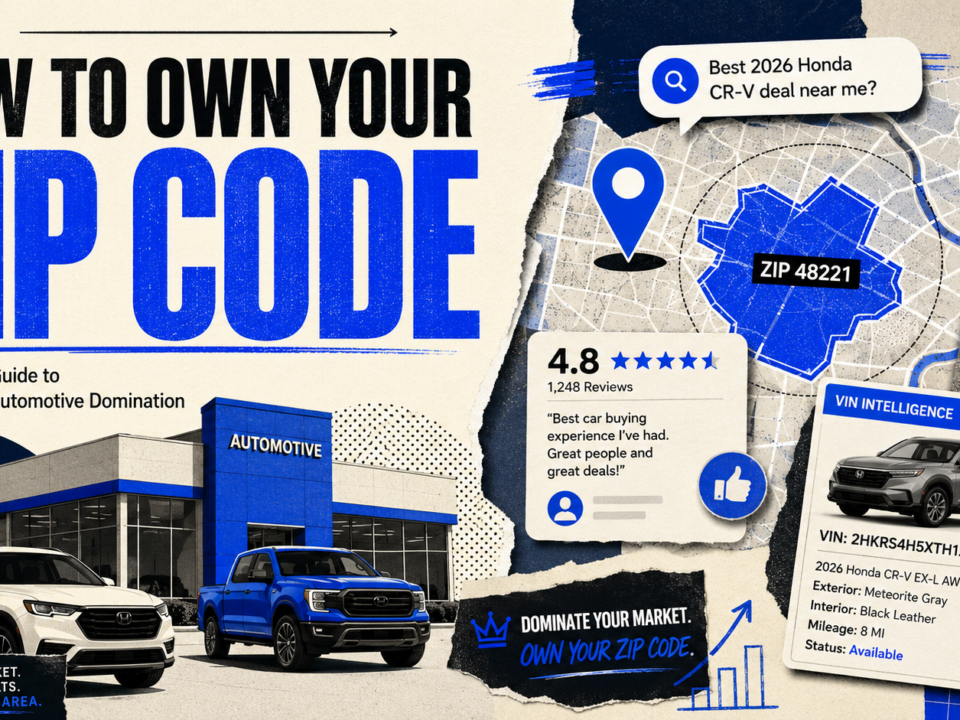
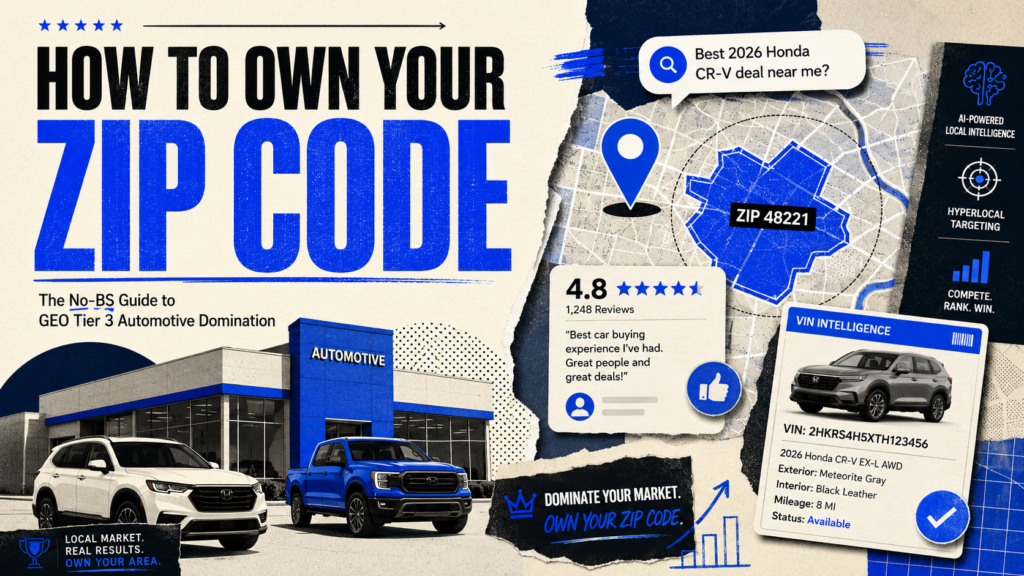
How to Own Your Zip Code: The No-BS Guide to GEO Tier 3 Automotive Domination
February 26, 2026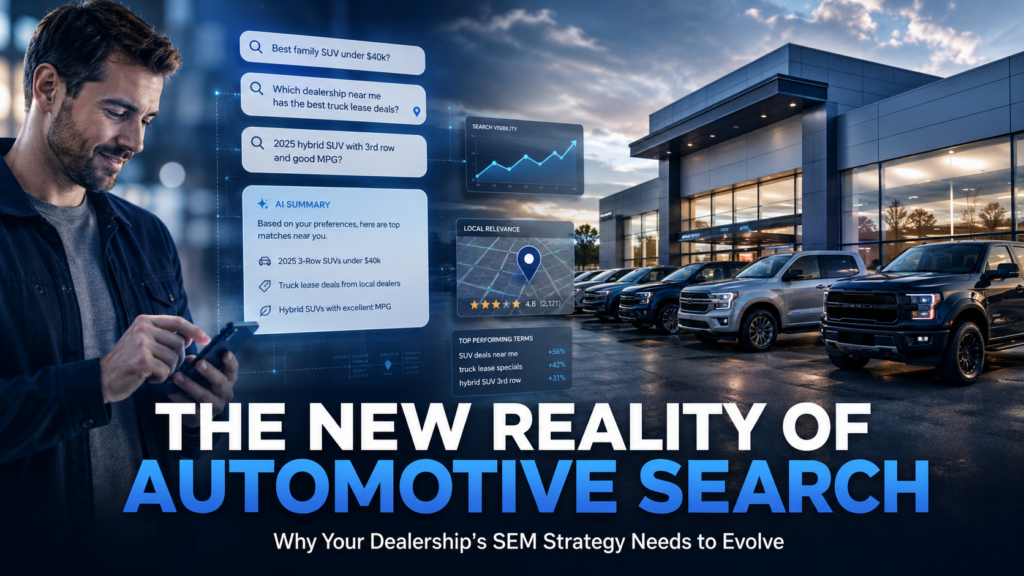
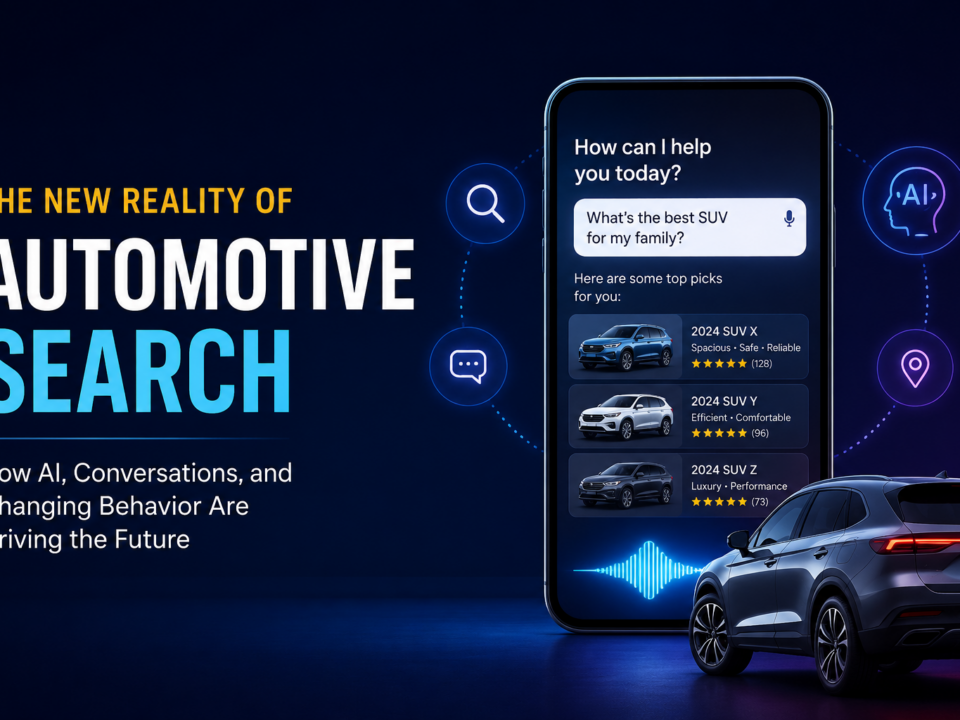
The New Reality of Automotive Search: Why Your Dealership’s SEM Strategy Needs to Evolve
The data is pretty loud: American car shoppers are changing how they search online. Recent industry research shows U.S. Google searches per user are down nearly 20% year-over-year. But here’s the part that matters for your dealership: Google isn’t “losing users”—it’s losing repeat searches.
Translation? People aren’t bouncing around through five different results like it’s 2016. They’re asking one question, getting an AI-generated answer, and moving on with their lives.
For automotive tier 3 marketers, this shift is both a headache and a huge opportunity. The customer journey is shrinking, search behavior is evolving, and the dealerships who adapt early will happily collect market share from the ones still running last year’s “set it and forget it” playbook.
What’s Actually Happening in Automotive Search
At MJS Advertising, we hear this a lot:
- “What did I do this time last year?”
- “My best month was May—what was working then?”
And honestly, fair questions. But here’s the uncomfortable truth: the answer isn’t always hiding in what you were doing then… it’s usually hiding in what you’re not doing now.
The automotive search landscape has shifted in three big ways:
1) AI Is Answering Questions Before Shoppers Click
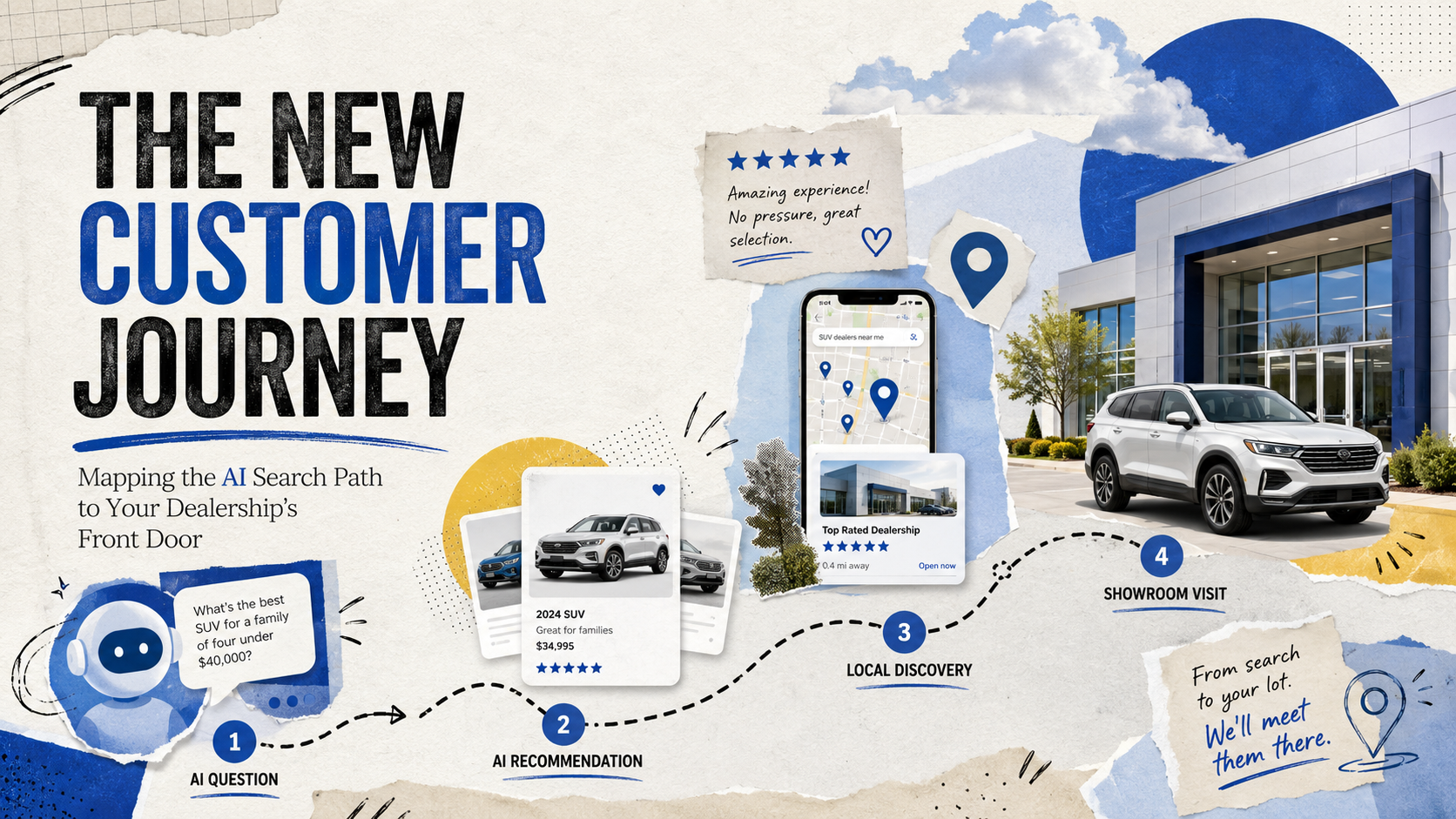
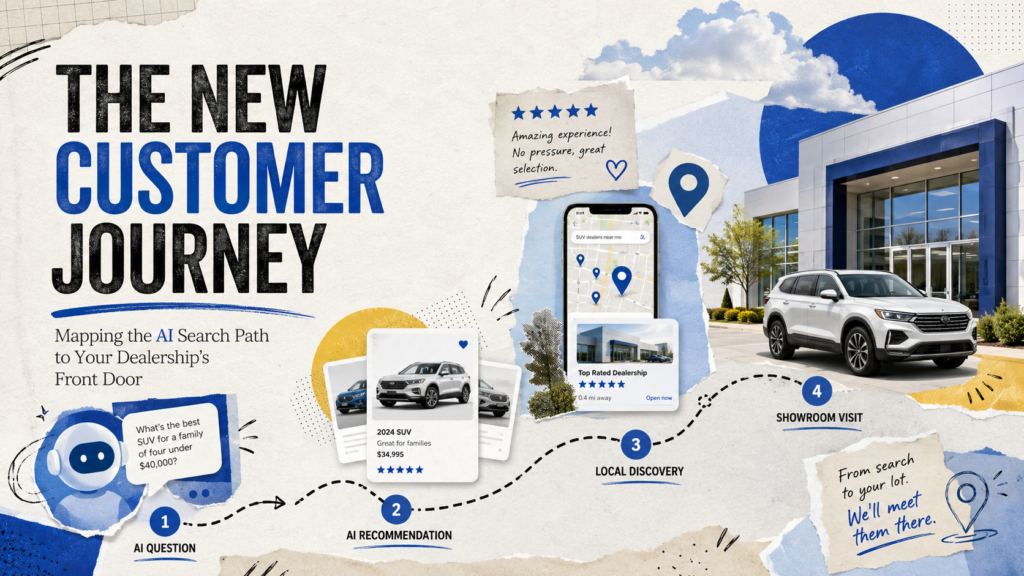
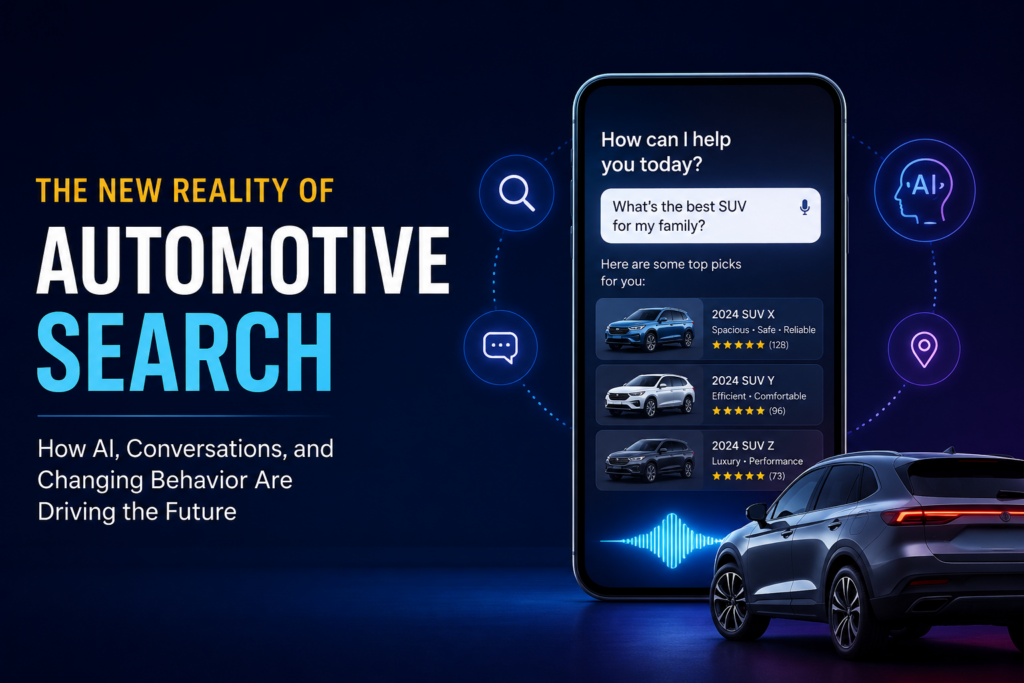
Car shoppers are increasingly using tools like ChatGPT, Perplexity, and Google’s AI Overviews to research vehicles, compare trims, and untangle financing. Instead of clicking through multiple dealership sites, they’re getting a neat little summary inside the AI interface.
For tier 3 marketing, that means traditional CTR metrics are… not wrong, just not the whole story anymore. A shopper might never visit your website and still be heavily influenced by whether your dealership shows up in AI-generated answers like:
- “Best Honda dealers near Orlando”
- “Where to buy a used truck in Central Florida”
If you’re not showing up in the answers, congrats: your competitor is.
2) Search Queries Are Longer and Way More Conversational
Shoppers are now comfortable asking questions like:
“What’s the best family SUV with third-row seating under $45k that gets good gas mileage?”
Instead of:
“best SUV”
So yes, search has officially entered its “full sentence” era.
This shift requires dealerships to optimize for the actual questions people ask—not just product-styled keywords. Your content needs to answer things like:
- “How much should I pay for a 2024 Silverado?”
- “Is now a good time to buy a new truck?”
…not just “Silverado inventory” and calling it a day.
3) Brand Authority Now Determines AI Visibility
AI tools overwhelmingly reference established, trusted sources. When they recommend dealerships, they tend to favor businesses with:
- strong review profiles
- consistent local citations
- authoritative content that clearly shows expertise
For tier 3, your dealership’s digital footprint (reviews, local SEO, content quality, brand mentions) directly impacts whether AI recommends you… or politely ignores you and sends shoppers elsewhere.
The Growth Paradox: More Searches, Fewer Clicks
The only constant in automotive marketing is change—and yes, it’s exhausting. We’re always trying to beat previous benchmarks, because growth is the goal. But how we get growth depends entirely on whether we evolve the strategy.
Here’s the paradox: searches like “car dealers near me” and “best price on [vehicle model]” are still strong, but the percentage of those searches that result in clicks is declining.
Because shoppers are getting answers faster, comparing options inside AI, and showing up later in the journey—often with higher intent.
So you may be getting fewer “window shoppers”… but the people who do come in are closer to buying. Which is kind of the point, right?
What This Means for Your Dealership’s SEM Strategy
Your SEM campaigns aren’t just “underperforming.” They’re experiencing structural changes driven by algorithms and customers who’ve learned that asking AI is easier than scrolling.
Here’s what needs to change:
Maximize Brand Authority on High-Intent Questions
Instead of only bidding on product terms like “Ford F-150 inventory,” make sure your dealership shows up for questions customers actually ask:
- “What’s a good price for a 2025 F-150 XLT?”
- “Which dealerships near me have the best F-150 lease deals?”
- “Is the F-150 or Silverado better for towing?”
Then create content that answers those questions clearly and confidently. AI tools reward comprehensive, structured answers that demonstrate actual expertise.
Implement Geographic Authority Campaigns
The data is pointing to something dealers can actually control: reviews that include specific local place names (neighborhoods, landmarks, communities) tend to perform better in AI recommendations than generic reviews.
Action item: Encourage customers to include location context in reviews, like:
- “Best dealership in Lake Nona”
- “Great service near MetroWest”
- “Found my truck at the dealership on Colonial Drive”
Adding geo-targeted campaigns to your platform mix is going to win for early adopters. This isn’t just “near me” visibility—it’s positioning your dealership as the authority in your market.
Optimize for the Full Search Ecosystem
Traditional Google search still matters—but shoppers now research across ChatGPT, YouTube, Reddit, Facebook, and forums. So your visibility strategy can’t be “Google-only” anymore (sorry, not sorry).
Key platforms for automotive tier 3:
- Google Business Profile: still critical for local search + AI citations
- YouTube: walkarounds, feature demos, customer testimonials
- Reddit: community discussions AI tools frequently pull from
- Facebook: local engagement + targeted advertising
- Review platforms: Google Reviews, DealerRater, Cars.com
If you’re only optimizing for one platform, you’re basically choosing to be invisible in the others.
Track AI Visibility as a Core KPI
More agencies are monitoring whether clients appear in AI-generated responses (alongside SEO and paid search metrics). For automotive tier 3, that means tracking:
- how often your dealership is recommended by ChatGPT, Perplexity, or Google AI Overviews
- which questions trigger your dealership’s mention
- how your AI visibility compares to local competitors
- correlation between AI citations and showroom traffic
Because if AI is steering the conversation, you should probably know whether you’re in it.
The Early Adopter Advantage
The dealerships seeing the strongest results aren’t necessarily spending more—they’re investing smarter in authority-building that actually sticks:
- Entity optimization over keyword stuffing: consistent NAP across platforms, clear messaging, strong brand signals
- Quality over quantity in content: one comprehensive “Buying a used car in 2026” guide can outperform ten thin SEO posts
- Reviews that tell stories: staff names, process details, local context = more weight than generic “Great experience!!!”
- Technical excellence: fast sites, schema, clean structure, mobile-first… still foundational
Yes, boring technical stuff still matters. Unfortunately.
Moving Forward: Questions to Ask Your Marketing Team
- Are we tracking AI visibility? Do we know how often we show up in ChatGPT or Perplexity recommendations for local searches?
- Is our content answering real customer questions—or just chasing old-school keywords?
- Do we have a review strategy that builds geographic authority (neighborhoods, landmarks, local context)?
- Are we optimized across the full search ecosystem (YouTube, Reddit, Facebook), not just Google?
- Can we measure correlation between AI visibility and showroom traffic? Attribution is harder now—but correlation still matters.
The Bottom Line
Automotive search has fundamentally changed. Shoppers still use Google—more than ever, in fact—but they search less frequently because AI gives them answers faster. They’re arriving later in the journey, but often with higher intent.
For tier 3 automotive marketers, the imperative is clear: be the dealership AI recommends.
Build content that answers real questions. Dominate local review platforms with detailed, location-specific feedback. Optimize for the full search ecosystem, not just Google.
The dealerships that move now will take share from competitors still asking why last year’s strategy “randomly stopped working.” (Spoiler: it wasn’t random.)
At MJS Advertising, we’re helping dealers navigate this new reality with geo-targeted campaigns, AI visibility tracking, and full-ecosystem optimization. The landscape keeps changing—but that’s exactly where the opportunity lives, if you’re willing to evolve.
Ready to future-proof your dealership’s search strategy? Let’s talk about building authority that works across traditional search, AI recommendations, and every platform where your customers discover their next vehicle.
Want to discuss how these trends impact your specific market? Contact MJS Advertising to schedule a strategy session focused on your dealership’s growth in the AI search era.